Loading...
First Round of Abstract Submission Ends: Dec 31, 2026
Extended Early Bird Ends: Dec 28, 2026

Keynote Speakers

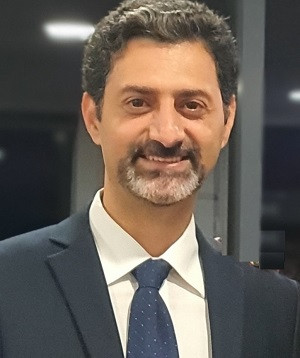
Dr. Dariush Zare
University of Tasmania, Australia
Title: Advanced Computational Design to Accelerate Innovation in Food Manufacturing and Processing
Dr Dariush Zare is a Senior Research Fellow at the University of Tasmania, working within the Centre for Food Innovation. Prior to joining University of Tasmania, he served as a Professor in the Department of Biosystems Engineering at Shiraz University and has held research appointments with UniSQ, UniSA, QUT and University of Manitoba. Dr Zare’s expertise spans engineering design, process simulation involving heat and mass transfer, applied thermodynamics, and advanced Multiphysics simulation for system design and optimisation. His research has focused extensively on the development and optimisation of innovative food and post-harvest technologies, including plasma, radio frequency (RF), infrared, ultrasonic, microwave, and solar thermal systems, as well as advanced grain drying technologies.
He has successfully supervised more than 20 Master’s theses and five PhD dissertations and has authored over 100 peer-reviewed journal articles and international conference publications.
Dr Zare currently serves as a Board Member of Technical Section IV (Energy) of the International Commission of Agricultural and Biosystems Engineering, one of the world’s leading professional organisations in biosystems engineering. He is also a member of the Editorial Board of the Q1 Elsevier journal Biosystems Engineering.
Dr. A. N. Jyothi
ICAR–Central Tuber Crops Research Institute, India
Title: Tuber Starch Innovation for the Future of Food: From Molecular Modification to Functional Applications
Dr. (Mrs.) A. N. Jyothi is a Principal Scientist at the Section of Crop Utilization at ICAR-Central Tuber Crops Research Institute (ICAR-CTCRI), Thiruvananthapuram, Kerala. She holds a Bachelor’s and Master’s degree in Chemistry from Mahatma Gandhi University, Kottayam, Kerala, India and a Ph.D. in Chemistry from the University of Kerala. With nearly three decades of research experience, Dr. Jyothi has made significant contributions to starch chemistry, particularly in the areas of chemical and physical modification of starch, resistant starch, starch-based polymers and hydrogels, biodegradable composites and nanocomposites, value addition of tropical tuber crops and their bioactive compounds. Her research has applications in food, biomedical, agricultural and industrial sectors. She has been associated with several institute and externally funded research projects involving modified starches, functional biopolymers, superabsorbent polymers, starch-based adhesives, phytochemicals and sustainable agricultural applications. She has also delivered invited lectures and lead talks at several national and international scientific forums. Dr. Jyothi has contributed extensively to the scientific literature, with 68 research papers published in peer-reviewed journals, in addition to books, book chapters, technical bulletins and other scientific publications. She is also an approved Ph.D. Research Guide in Chemistry and has guided 6 Ph.D. scholars, with 5 scholars having been awarded their Ph.D. and 1 scholar currently pursuing research. She has received several awards and recognitions, including the ICAR Team Research Award for Outstanding Interdisciplinary Team Research in Agriculture and Allied Sciences and the Dr. G. Rangaswami Memorial Young Scientist Award. She has held several academic, editorial and professional positions.
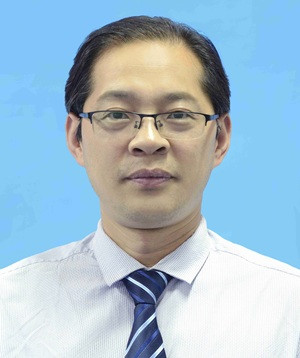
Prof. GUAN Wenqiang
Tianjin University of Commerce, China
Title: Effect of citronella essential oil fumigation on sprout suppression and quality of potato tubers during storage
GUAN Wenqiang is a full Professor of College of Biotechnology and Food Science, Tianjin University of Commerce, China. He received his B.S. and M.S. degrees in food science in 1997 and 2000, respectively, at Henan Institute of Science and Technology, Northwest Agriculture and Forestry University of China, and Ph.D. degree in chemical technology in 2006 at Tianjin University of China. As visiting scientist, he had worked with Eastern Regional Research Center, Agricultural Research Service, USDA in 2009 and 2012, with Guelph Food Research Center, AAFC, Canada in 2014, and with UC Davis, USA in 2016. He also worked with National Engineering and Technology Research Center for Postharvest Biology and Technology of China for 11 years and with Institute of Food Science and Technology CAAS for about 1 year. He is specialized in developing novel technologies and facilities to enhance nutritional quality and microbial safety of fresh agricultural products while maintaining product quality by physical treatment (Precise temperature, electric and magnetic field, ultraviolet light and active packaging). His research has been funded by many national, provincial and corporate programs. He has published more than 240 peer review articles (in Chinese and English) and book chapters as well as 12 books (in Chinese). He is editorial board members of Food Chemistry, Journal of future foods,.
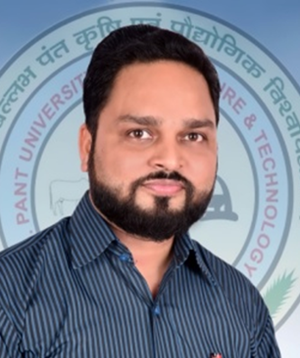
Dr. Amit Kesarwani
University of Agriculture and Technology, Pantnagar, India
Title: Resilient Crop Systems: Balancing high production and premium quality in sustainable grain farming
Dr. Amit Kesarwani is a teacher, innovator, career consultant and working as an Assistant Professor in College of Agriculture (Agronomy) at Govind Ballabh Pant University of Agriculture and Technology, Pantnagar, Uttarakhand. He is also Visiting Fellow at Western Sydney University, Australia. The core of his interest has been exploring input efficient agriculture technology and sustainable farming practice. He pursued his PhD from National Chung Hsing University, Taiwan under Ministry of Education Fellowship, Taiwan and recipient of Junior Research Fellowship during Masters too. Dr. Kesarwani serves as a board member of the various international journal and society, further shaping the future of agriculture sciences globally.
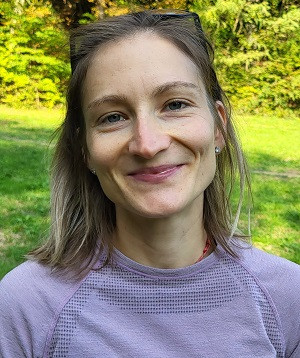
Dr.Ana Kovačič
Jožef Stefan Institute, Slovenia
Title: Tracking Neuroactive Compounds: From Food to the Gut Microbiome
Dr. Ana Kovačič is a Research Associate at the Jožef Stefan Institute, specializing in the analysis of micropollutants and bioactive compounds using targeted and non-targeted mass spectrometry, with a focus on metabolomics. Her research interests also include a detailed understanding of in vitro digestion and colon fermentation models. The main goal of her research is to investigate the fate of compounds in the environment and their behavior once they enter the human body, including their potential roles in disease and exposure. She has authored 23 scientific publications and has an h-index of 12. She has co-supervised one PhD student and one master’s student and is currently co-supervising one master’s student. She completed an MSCA Postdoctoral Fellowship (European Fellowship 2021) in the Metabolomics Research Unit at Fondazione Edmund Mach (FEM), Italy, and currently continues her research at the Jožef Stefan Institute under the Slovenian Recovery and Resilience Plan.
Prof. Nesibe Ebru Kafkas
University of Cukurova, Türkiye
Title: Berries for Better Health: Integrating Advanced Fruit Quality Analysis, Omics, and Breeding
Prof Nesibe Ebru KAFKAS graduated with an award from University of Çukurova Faculty of Agriculture Department of Horticulture in Adana provinces in Türkiye and working as a senior lecturer and researcher position at the same University. She is also a member of Biotechnology Department at the same university. Her PhD was on “Identification of aroma compounds of some strawberry genotypes and relationship between aroma compounds and some fruit quality characteristics”. During her PhD she worked at the Newe Yaar Research Institute affiliated with the Israeli Ministry of Agriculture from 1998 to 2000 as visiting scientist and worked on “Flavour and Aroma Formation in Strawberry Fruits (F. xananassa), GIF (ISRAEL- GERMANY), Research Grant G591-113.12/98) and Improved Fruit Set and Elimination of Fruit Deformation in Strawberry via Biotechnological Manipulation, BARD (ISRAEL- GERMANY) Projects, 1999. Lately she joined international projects and she is the National Coordinator and MC member of the EU COST projects, EU PRIMA Medberry project, EU HORIZON Breeding Value projects. She is also the manager of some national scientific and center of excellence projects. Her scientific interests focus on improving resilient berries against biotic, abiotic stress factors and flavorful and healthy berries by applying classical breeding and biotechnological methodologies. She has also experince on in vitro propagation and gene transformation methodologies on berries and has 30 years of experience. Her H index is 20 and she has more than 100 previously published papers in international refereed journals. She has also experience as an editor of some books and special issue editor in some refreed journals.
Dr. Patrícia Duque-Estrada
University of Copenhagen, Denmark
Title: Optimising the Nutritional Quality of Plant Protein-Based Foods: Insights into Processing and Protein–Starch Interactions
Patrícia Duque-Estrada, Assistant professor at the Food Analytical and Biotechnology Section at the Department of Food Science, University of Copenhagen, Denmark. PhD in Food Science at the Laboratory of Food Process Engineering (2019), Wageningen University & Research, The Netherlands. She has spent the past 10 years investigating how different food-processing methods affect plant protein digestibility and antinutrients, using in vitro models and proteomics approaches to study protein oxidation. Her research focuses on in vitro protein digestibility, antinutrients, protein oxidation, and processed plant proteins.
Dr. Marcelo Giordani Minozzo
Federal University of Paraná, Brazil
Title: TFrom Technology to the Plate: Fish, Innovation, and the Making of Future Consumers
Marcelo Giordani Minozzo holds a degree in Fisheries Engineering and a Master’s and Ph.D. in Food Technology from the Federal University of Paraná. He is a professor at the Federal Institute of Espírito Santo, Piúma Campus, working in food science and technology with an emphasis on fishery-based products. He also serves as coordinator of the Study Group on Fish Processing (GePP).